Scientific High Council
Distinguished researchers and experts from leading universities worldwide, guiding our mission to bridge academia and industry
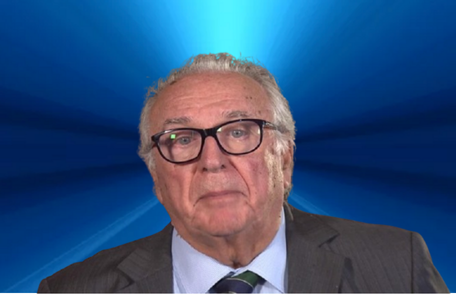
Luciano Maiani
Medaglia Dirac, Premio Sakurai, Ex Direttore Generale del CERN, Ex Presidente dell’INFN e del CNR
CERN
Maiani served as Director General of CERN in Geneva and President of the National Research Council (CNR). He is the author of highly influential scientific papers. In a paper co-authored with Glashow and Iliopoulos, he predicted the existence of the charm quark, which was subsequently discovered at SLAC in 1974 and earned its discoverers the Nobel Prize in Physics.
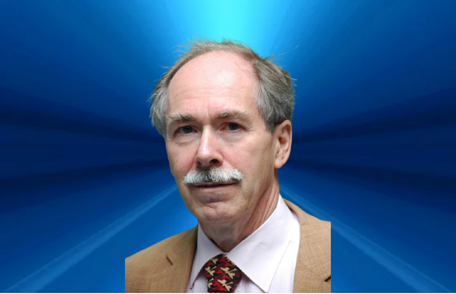
Gerardus ‘t Hooft
Nobel Prize in Physics
Utrecht University
Physicist, his groundbreaking studies on fundamental interactions have reshaped our understanding of matter and the forces governing the universe. Beyond his academic achievements, his career stands as a testament to how theoretical research can bring lasting and revolutionary impact on science and society.
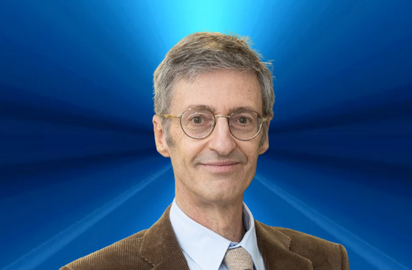
Gian Francesco Giudice
Director of the Theoretical Physics Department at CERN
CERN
Director of the Theoretical Physics Department at CERN in Geneva. He is the author of influential scientific works and a gifted communicator, exploring the farthest frontiers of our understanding of the universe. His vision makes complex topics such as the Big Bang, dark matter, and the fundamental laws of nature accessible and inspiring.
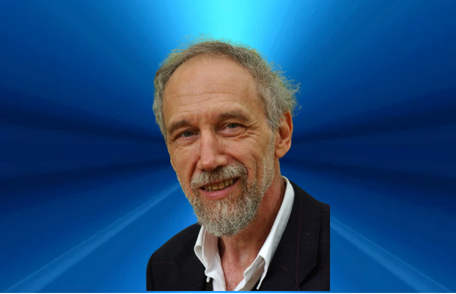
Alain Connes
French mathematician who won the Fields Medal in 1982 for his work in operator theory.
Alain Connes is a French mathematician, known for his contributions to the study of operator algebras and noncommutative geometry. He was a professor at the Collège de France, Institut des Hautes Études Scientifiques, Ohio State University and Vanderbilt University.
He was awarded the Fields Medal in 1982. Connes was awarded the Peccot-Vimont Prize in 1976 the Ampère Prize in 1980, the Fields Medal in 1982, the Clay Research Award in 2000 and the Crafoord Prize in 2001. The French National Centre for Scientific Research granted him the silver medal in 1977 and the gold medal in 2004.
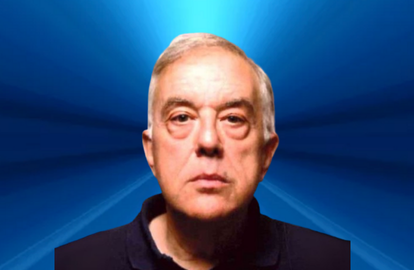
Ugo Moschella
Full Professor, Department of Physics and Mathematics, University of Insubria
Ugo Moschella graduated in physics from the University of Bologna in 1985. After studying at New York University, he obtained a PhD in Physics from SISSA in Trieste.
He worked as a researcher and taught at the University of Louvain-La Neuve, the University of Paris 7, at the CEA – Commissariat à l’Energie Atomique of Gif-sur-Yvette, at the Institut des Hautes Etudes Scientifiques of Bures-Sur-Yvette.
He was a Marie Curie Fellow at CEA, a Research Associate at CERN in Geneva, and a Scholar at Fudan University in Shanghai.
He is currently Full Professor of Theoretical Physics at the University of Insubria in Como.
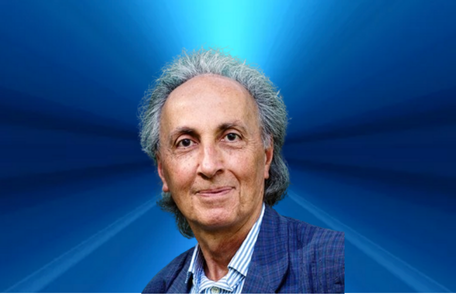
Thibault Damour
Recipient of the Albert Einstein Prize the Dirac Medal and the Médaille D’0r of CNRS
Thibault Damour is one of the leading theoretical physicists of our time, renowned for his fundamental contributions to General Relativity and the theory Gravitational Waves. His work laid the theoretical foundations that enabled the groundbreaking detection of gravitational waves, opening a new era for astrophysics. Through his research, he has made it possible to “listen” to the universe in ways that were once unimaginable.
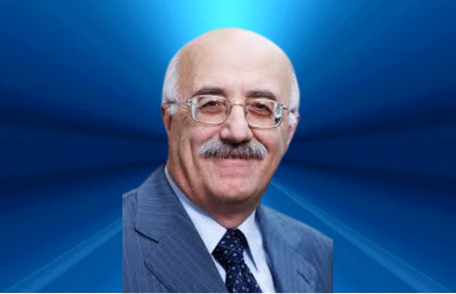
Michele Parrinello
Benjamin Franklin Medal in Chemistry, Dreyfus Prize in Chemical Sciences, Dirac Medal, Marcel Benoist Prize, ACS Award in Theoretical Chemistry
Michele Parrinello is an Italian physicist particularly known for his work in molecular dynamics (the computer simulation of physical movements of atoms and molecules). Parrinello and Roberto Car were awarded the Dirac Medal of the International Centre for Theoretical Physics (ICTP) and the Sidney Fernbach Award in 2009 for their continuing development of the Car–Parrinello method, first proposed in their seminal 1985 paper, “Unified Approach for Molecular Dynamics and Density-Functional Theory”. They have continued to receive awards for this breakthrough, most recently the Dreyfus Prize in the Chemical Sciences and the 2021 Benjamin Franklin Medal in Chemistry.
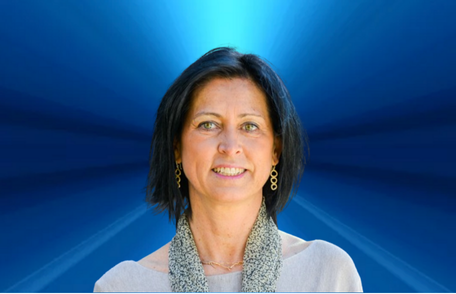
Antonietta Mira
Founder of the Data Science Lab at USI, Mira’s 1998 dissertation won the Leonard J. Savage Award of the International Society for Bayesian Analysis.
Antonietta Mira is professor of statistics, founder and director of the Data Science Lab at USI where she served as the Vice-Dean in the Faculty of Economics. She is also part-time professor of statistics at Università dell’Insubria, is a fellow of the Istituto Lombardo Accademia di Scienze e Lettere, a fellow of the International Society for Bayesian Analysis (ISBA), a visiting fellow of the Isaac Newton Institute for Mathematical Sciences at Cambridge University and has been a visiting professor at Université Paris-Dauphine, University of Western Australia, Queensland University of Technology, Brisbane, and University of Bristol, UK. She has won awards for excellence in both research and teaching. She is the principal investigator on several projects at the Swiss National Science Foundation
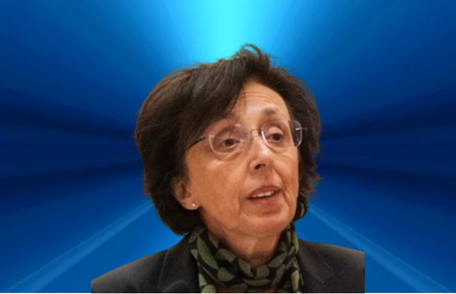
Giulia Galli
Liew Family Professor of Molecular Engineering in the UChicago Pritzker School of Molecular Engineering
Giulia Galli is a condensed-matter physicist. She is the Liew Family Professor of Electronic Structure and Simulations in the Pritzker School of Molecular Engineering and the department of chemistry at the University of Chicago and senior scientist at Argonne National Laboratory. She is also the director of the Midwest Integrated Center for Computational Materials. She is recognized for her contributions to the fields of computational condensed-matter, materials science, and nanoscience, most notably first principles simulations of materials and liquids, in particular materials for energy, properties of water, and excited state phenomena.
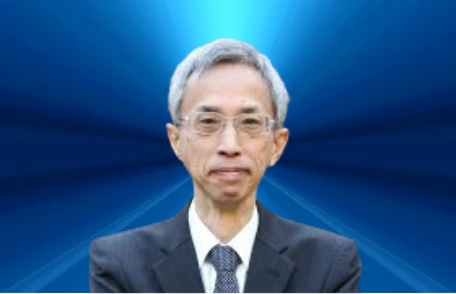
Hidetoshi Nishimori
Specially-appointed Professor and Professor Emeritus
Organization for Fundamental Research, Institute of Integrated Research
Institute of Science Tokyo
I am a Professor at the Institute of Innovative Research, Tokyo Tech, and head of the Quantum Computing Research Unit. After earning my BSc, MSc, and DSc in Physics from the University of Tokyo and completing postdoctoral work at Carnegie Mellon and Rutgers, I returned to Japan. My research centers on spin glass theory and, more recently, quantum annealing for combinatorial optimization. I am excited about the interdisciplinary nature of this field and look forward to advancing it further within the stimulating environment of iTHEMS.
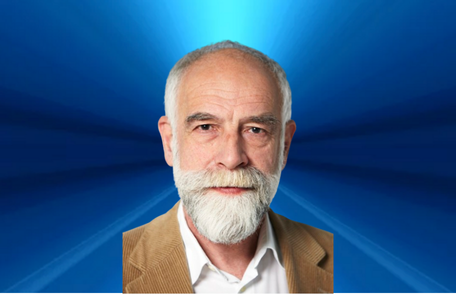
Jürg Fröhlich
Swiss mathematician and theoretical physicist. Known for introducing rigorous techniques for the analysis of statistical mechanics models.
In 1965 Fröhlich began to study mathematics and physics at Eidgenössischen Technischen Hochschule Zürich. In 1969, under Klaus Hepp and Robert Schrader, he attained the Diplom (“Dressing Transformations in Quantum Field Theory”), and in 1972 he earned a PhD from the same institution under Klaus Hepp. After postdoctoral visits to the University of Geneva and Harvard University (with Arthur Jaffe), he took an assistant professorship in 1974 in the mathematics department of Princeton University. From 1978 until 1982 he was a professor at Institut des Hautes Études Scientifiques in Bures-sur-Yvette in Paris, and since 1982 he has been a professor for theoretical physics at ETH, where he founded the Center for Theoretical Studies.
Over the course of his career, Fröhlich has worked on quantum field theory (including axiomatic quantum field theory, conformal field theory, and topological quantum field theory), on the precise mathematical treatment of models of statistical mechanics, on theories of phase transition, on the fractional quantum Hall effect, and on non-commutative geometry.